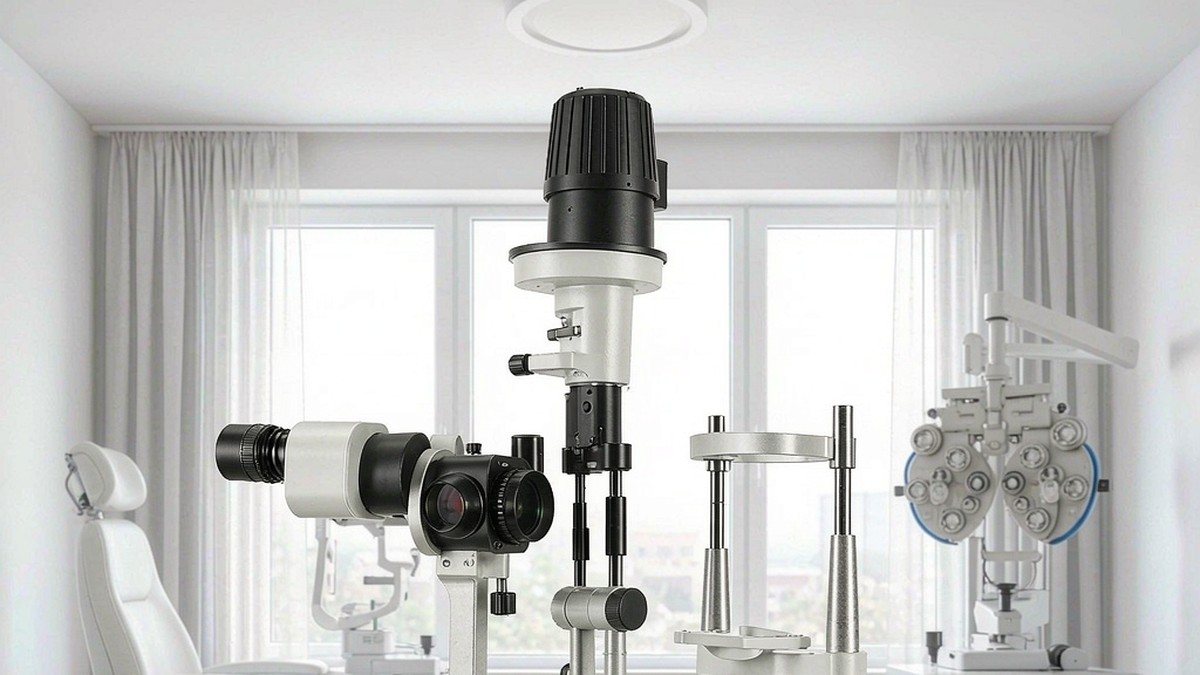
Ophthalmic Equipment
Supplier in China
Slit lamps, tonometers, autorefractors, OCT and fundus cameras for eye clinics and optometry practices. Low MOQ, mixed container shipping and complete export documentation — worldwide.
Product Range
Four sub-categories cover the full eye clinic, from routine examination to retinal imaging.
Slit Lamps
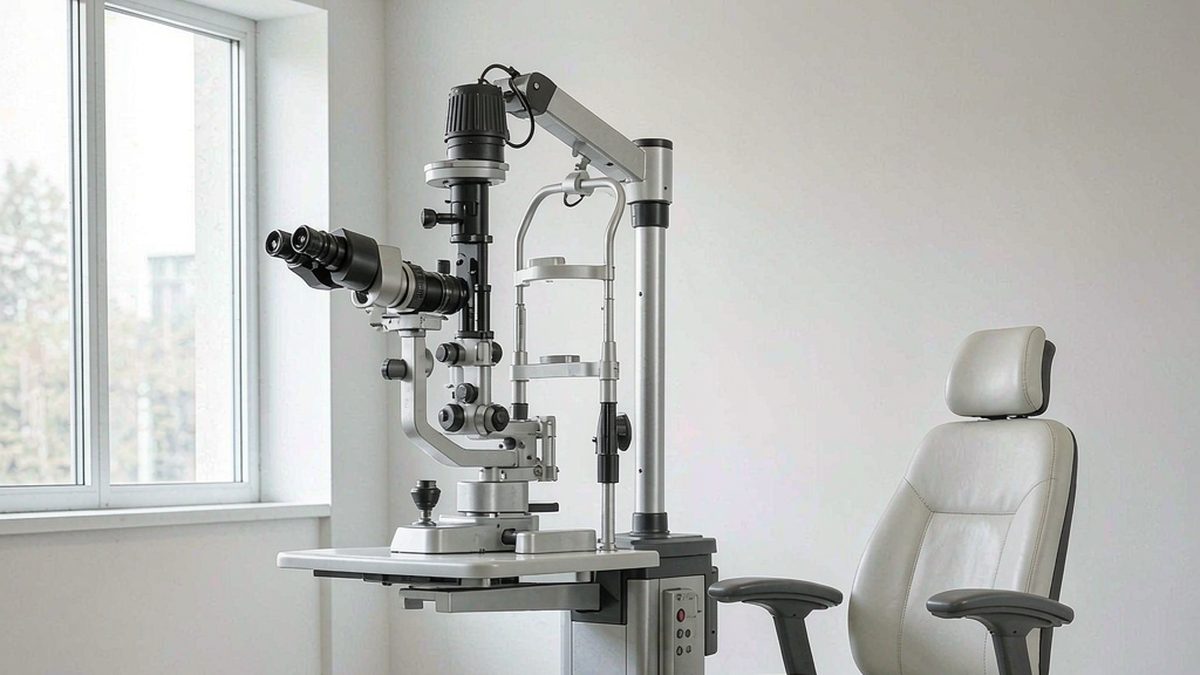
Slit lamp microscopes for anterior segment examination — digital models with image capture, plus portable versions for outreach and screening programs.
Request models & pricingTonometry & Refraction
Tonometers (including handheld models), autorefractors and auto refracto-keratometers, and optometry units for routine refraction and glaucoma screening.
Request models & pricingRetinal Imaging — OCT & Fundus
Spectral-domain OCT systems and fundus cameras for retinal documentation, glaucoma monitoring and diabetic eye screening.
Request models & pricingOphthalmic Units & Accessories
Ophthalmic unit tables and stands, examination accessories, and replacement parts — everything that keeps an examination room running day to day.
Request models & pricingBrowse the full ophthalmic catalog
14 product types — slit lamps, fundus cameras, OCT, operation microscopes, phaco, dry eye analyzers and more — in one directory.
Key Specifications to Compare
When you compare ophthalmic equipment quotes, these are the specifications that decide whether a device fits your clinical workflow.
Slit lamp — magnification and illumination
Compare the magnification steps (commonly a range such as 10× to 16× or higher), the illumination field and LED brightness, and whether image capture is built in. A wider magnification range covers both routine screening and detailed anterior segment work with one device.
Tonometer — measurement method and accuracy
Applanation and non-contact methods differ in patient comfort and throughput. For handheld models, check the measurement range and accuracy specification, and whether the device stores readings for follow-up tracking of glaucoma patients.
Autorefractor — measurement range
Check the sphere and cylinder measurement ranges, the minimum pupil size the device can measure, and measurement speed — important in busy practices and for pediatric or low-cooperation patients.
OCT — resolution, scan rate and depth
Axial resolution (lower micrometers means finer retinal detail), A-scan rate (higher is faster and more comfortable for the patient), scan depth and the imaging protocols included. These decide whether the system suits glaucoma, retinal or anterior segment work.
Featured Ophthalmic Models
Popular models from the ophthalmic range. Additional models and full specifications are available on request.
Why Source Ophthalmic Equipment From Us
What clinics and distributors get when they order through Hifengda.
Low MOQ & Trial Orders
Single-unit orders are accepted for most models — practical for a first clinic or a distributor testing a territory.
Calibration & Software Support
Devices are checked and calibrated before shipment; software updates, training videos and remote support included.
Complete Export Documents
Commercial Invoice, Packing List, Certificate of Conformity, ISO 13485 certificate and Certificate of Free Sale, prepared for your import process.
Mixed Container Loading
Slit lamps, tonometers and OCT — even with dental or ENT items — can share one container to keep freight costs low.
12-Month Warranty
Warranty with spare-parts support; imaging system setup and image-quality checks after installation.
Video-Call Inspection
Inspect equipment and the production floor by video call before shipment, wherever you are.
Ophthalmic Equipment FAQ
Practical answers for clinics and distributors ordering ophthalmic equipment.
What equipment does a basic eye clinic need?
A practical starting set covers a slit lamp, a tonometer, an autorefractor or optometry unit and a direct ophthalmoscope; add retinal imaging such as a fundus camera or OCT as your services grow. Our ophthalmic buyer's guide breaks this down in more detail.
What is the difference between an OCT and a fundus camera?
A fundus camera photographs the surface of the retina and is well suited to documentation and screening, while an OCT captures cross-sectional images of the retinal layers and is essential for diagnosing and monitoring conditions such as glaucoma and macular disease. Many clinics start with a fundus camera and add an OCT later.
Do you provide calibration and software support for ophthalmic devices?
Yes. Devices are checked and calibrated before shipment, and we provide software updates, training videos and remote technical support. For imaging systems we also help with initial setup and image-quality checks after installation.
What is the MOQ and lead time for ophthalmic equipment?
MOQ is low and single-unit orders are accepted for most models. Production lead time is typically 7-25 working days; sea freight to your nearest port usually takes 20-45 days, and air freight about 5-9 days for urgent orders.
Ready to Equip Your Eye Clinic?
Send your product list or requirements via live chat.
We will reply with suitable models, a clear quotation and lead time within 24 hours.
[email protected] · We reply fast via live chat